





NRI
Our Task
Behavioral Health Website Design Task
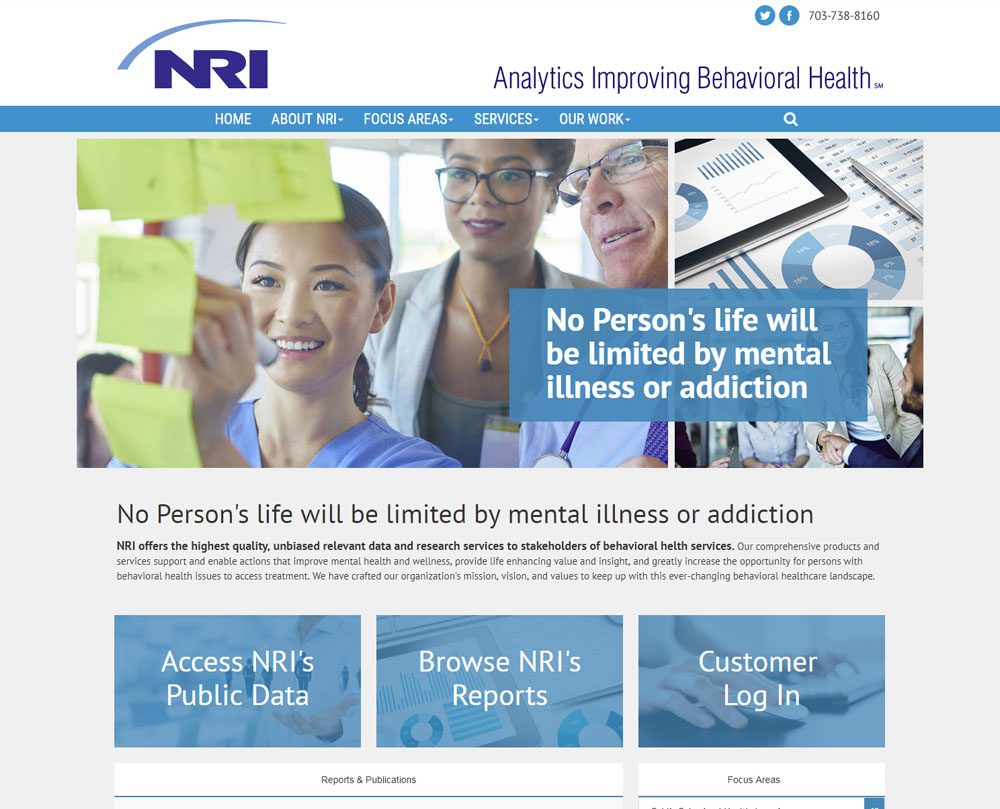
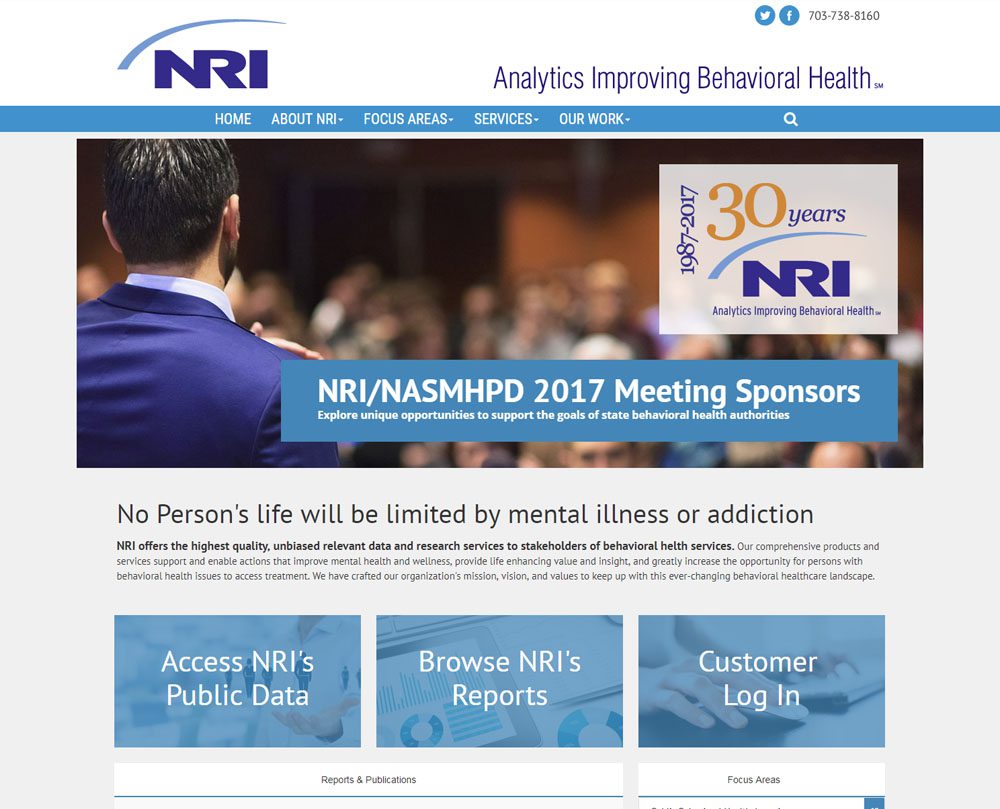
NRI needed a responsive website that could present complex information about behavioral health service delivery systems in a clearer, more useful digital format. The organization works with data, performance measures, state agencies, psychiatric facilities, public behavioral health systems, and many different stakeholder groups. The Behavioral Health Website Design assignment focused on creating a website that could organize those topic areas, support public communication, and help users find relevant content more easily.
blueunderground designed, programmed, hosted, and supported the website using the Umbraco content management system. The project included responsive functionality, information architecture, managed SEO, scheduled website backups, content updates, webmaster services, and ongoing Umbraco maintenance. The Behavioral Health Website Design needed to serve both the visible public experience and the practical content management needs behind the site.
The project required more than a visual redesign. NRI’s website needed a structure that could hold many areas of expertise without making the experience feel fragmented. Users might arrive looking for data, reports, state profiles, performance measurement information, behavioral health system resources, psychiatric hospital quality information, or background about NRI’s work. The Behavioral Health Website Design needed to create clearer pathways through that material.
NRI also needed help navigating the competing interests of different stakeholders while developing a coherent digital marketing plan. A behavioral health data organization often communicates with state agencies, federal partners, public and private organizations, behavioral health administrators, researchers, hospital leaders, and policy audiences. The website needed to help those audiences understand the organization’s role without turning the site into a dense internal filing system.
For blueunderground, the assignment centered on responsive website design, Umbraco website development, information architecture, and practical long-term support. The finished direction helped NRI present its behavioral health data work in a more organized format while giving staff a content management system that could support updates, resources, reports, and changing communication needs over time.
Services Provided
Behavioral Health Website Design Services Provided
blueunderground provided website design and development services for NRI, including responsive design, Umbraco website development, hosting, information architecture, managed SEO, scheduled website backups, content updates, webmaster services, and ongoing maintenance. The Behavioral Health Website Design work focused on clarity, usability, technical stability, and content organization for a specialized behavioral health data organization.
- Responsive behavioral health website design
- Umbraco website design and development
- Website programming and hosting support
- Information architecture for complex content areas
- Digital marketing planning and stakeholder communication support
- Managed SEO for behavioral health website content
- Scheduled website backups
- Umbraco maintenance and technical support
- Content updates and webmaster services
- Responsive front-end implementation using HTML and CSS
- Visual asset preparation and interface refinement
The service mix reflected the specific needs of the project. NRI’s website was not a simple brochure site. It needed to support a large body of behavioral health information, help different audiences locate relevant content, and give staff a practical way to manage material across many topic areas. The Behavioral Health Website Design therefore required planning, structure, and long-term maintainability.
The project drew on blueunderground’s Website Design & Website Development experience for organizations with complex content and multiple audiences. For NRI, design and development had to work together. The visual presentation needed to feel clear and credible, while the technical implementation needed to support a responsive website, structured navigation, CMS editing, hosting, and future website support.
Because the project used Umbraco, blueunderground also connected the work to its Umbraco Website Development experience. Umbraco gave the site a content management foundation that could support custom templates, structured editing, and a more organized publishing workflow. That foundation was especially important for a website with many content areas and ongoing updates.
The work also required a careful editorial approach. Behavioral health data, public systems, and performance measurement can become difficult to navigate if information is not organized clearly. The Behavioral Health Website Design focused on helping users move from broad topics to specific resources while preserving NRI’s professional tone and technical credibility.
Behavioral Health Website Design for Complex Information Architecture
Information architecture was one of the most important parts of the NRI project. The organization needed a new structure that could help users find relevant content among many disparate topic areas within its fields of expertise. The Behavioral Health Website Design needed to bring order to a site that served many users, topics, and organizational priorities.
Behavioral health websites often have to communicate across several layers of information. A visitor may need an organizational overview, a specific report, a data resource, a service description, a history page, a project update, or a technical explanation of performance measurement. NRI’s website needed to support those different tasks without forcing every visitor through the same path.
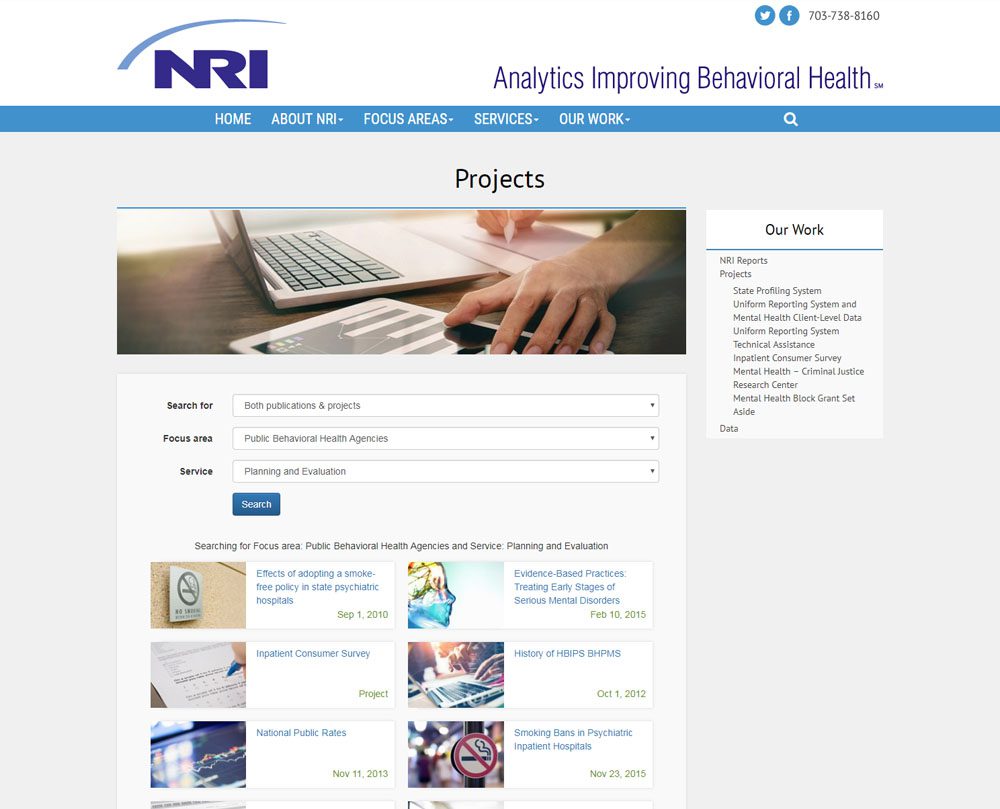
The redesigned information architecture helped create more meaningful relationships between sections. Instead of treating every page as a separate island, the Behavioral Health Website Design considered how users would move through services, reports, focus areas, data, and organizational background. That helped make the site more useful for people who arrived with specific questions and for people who were learning about NRI for the first time.
Clear structure also supports credibility. NRI works with serious public information about behavioral health systems, psychiatric hospitals, service delivery, state data, quality improvement, and policy-relevant reporting. The website needed to reflect that seriousness. A well-organized Behavioral Health Website Design helped the content feel more accessible while preserving the authority of the subject matter.
The information architecture also needed to support staff management after launch. A website can be attractive on launch day but difficult to maintain if the structure is not practical. The Umbraco CMS implementation gave NRI a foundation for managing content in a more organized way as new materials, reports, services, and updates were added over time.
Responsive Behavioral Health Website Design
The NRI website needed to work for users across devices and settings. Behavioral health administrators, public agency staff, researchers, hospital leaders, consultants, and policy audiences may access the site from desktop computers, laptops, tablets, or phones. The Behavioral Health Website Design needed to keep the content readable and navigable across those different environments.
Responsive design was especially important because NRI’s content can be detailed. Pages about data, services, performance measurement, reports, quality improvement, and behavioral health systems often include language that requires careful reading. The layout needed to support scanning, reading, and navigation without creating unnecessary friction for users.
A responsive website also helps maintain trust. Visitors to a public-facing behavioral health data site expect the information to be current, organized, and professionally presented. When a website performs poorly on smaller screens, users may question whether the content is equally difficult to use. The Behavioral Health Website Design helped NRI present a more current and usable digital experience.
The responsive implementation also supported long-term content growth. New pages, reports, and resource updates needed to fit within the established design system. A clear responsive foundation helped new material remain consistent with the rest of the site instead of feeling like disconnected additions.
For blueunderground, responsive planning was part of the larger website strategy. The Behavioral Health Website Design was not only about making pages shrink to fit smaller screens. It was about preserving hierarchy, clarity, and content usefulness so NRI’s audiences could move through the site with greater confidence.
Behavioral Health Website Design for Stakeholder Communication
NRI’s website needed to communicate with many stakeholders. The organization works in a field that includes state behavioral health agencies, the federal government, psychiatric facilities, public and private partners, researchers, administrators, and organizations that rely on data to understand service delivery systems. The Behavioral Health Website Design needed to support those relationships with a coherent public presentation.
Stakeholder communication can become difficult when every audience has a different priority. One user may be interested in performance measurement. Another may be looking for state-level behavioral health information. Another may want to understand NRI’s history, services, or reports. A website serving those audiences needs a structure that can accommodate different entry points without becoming confusing.
The project therefore emphasized clarity and organization. The Behavioral Health Website Design helped NRI describe who it serves, what it does, and why its data work matters. The site needed to make the organization’s expertise visible without burying visitors under too much technical language at the beginning of the experience.
Digital marketing planning was also part of the assignment. For a specialized organization like NRI, marketing is not only promotional. It is also about explaining expertise, organizing content, and helping the right audiences understand the value of the work. The Behavioral Health Website Design supported that purpose by connecting website structure, messaging, and stakeholder needs.
This kind of communication is especially important for organizations that work with data and public systems. The website needed to help translate NRI’s technical role into a public-facing experience that felt clear, credible, and useful. That balance shaped the Behavioral Health Website Design from the beginning.
Behavioral Health Website Design With Umbraco CMS Support
The NRI website was built using the Umbraco content management system. That platform choice supported a structured website with editable content, custom templates, and practical management tools. The Behavioral Health Website Design needed to give NRI a public website that looked organized and a back-end system that could support ongoing content updates.
A CMS is especially important for a behavioral health data organization because content changes over time. Reports, announcements, service information, focus areas, data resources, and project updates may all need to be added, revised, or reorganized. The Umbraco implementation helped support that ongoing publishing need.
The CMS also had to reflect the site’s information architecture. A content management system is most useful when the editing structure matches the public structure. The Behavioral Health Website Design considered how NRI staff would manage pages and how visitors would browse the finished site. That connection helped make the website more practical after launch.
Umbraco maintenance was part of the assignment as well. The project included updates, managed SEO, scheduled backups, content updates, and webmaster services. Those services helped protect the value of the website after the initial redesign. A complex public-facing site needs continuing attention to remain stable, useful, and aligned with the organization’s goals.
The Behavioral Health Website Design therefore connected design, development, and maintenance. The website was not treated as a one-time publication. It was built as a communication system that could continue supporting NRI’s behavioral health data work as content and organizational needs changed.
Behavioral Health Website Design for Data, Reports, and Resources
NRI’s work depends on data, analysis, performance measures, reports, and practical information about behavioral health service delivery systems. The website needed to make that work easier to understand and easier to find. The Behavioral Health Website Design helped create a public structure for presenting data-related content to audiences that may have different levels of familiarity with NRI.
Behavioral health data can be difficult to present because it often connects with policy, funding, quality improvement, state systems, psychiatric facilities, and service delivery. The website needed to avoid overwhelming users while still respecting the complexity of the subject. That required clear page structure, readable headings, and organized navigation.
The project also needed to support NRI’s role as a resource for behavioral health administrators and partner organizations. Users might come to the site to understand state behavioral health systems, review research, locate reports, or learn about services. The Behavioral Health Website Design helped create a more accessible foundation for those tasks.
Content organization also mattered because NRI’s fields of expertise include multiple topic areas. A site with many topics can easily become hard to use if categories are not clear. The redesigned structure helped users move from general information to more specific content without losing their place.
The result was a website that could better support NRI’s knowledge-sharing role. The Behavioral Health Website Design helped turn a complex body of information into a more manageable website experience for public audiences, partners, and staff.
Behavioral Health Website Design Results
The completed project gave NRI a responsive website with a clearer structure for behavioral health data, reports, services, and organizational information. The Behavioral Health Website Design helped users move through a complex subject area with greater ease and gave the organization a stronger digital foundation.
The redesign also strengthened content management. By using Umbraco, the site could support structured editing, organized page types, and ongoing updates. The Behavioral Health Website Design helped NRI manage content more effectively while maintaining a more polished public experience.
The project also improved the relationship between website structure and stakeholder communication. NRI needed to serve different audiences with different levels of technical knowledge and different reasons for visiting the site. The Behavioral Health Website Design helped organize the site around clearer pathways and more coherent messaging.
Long-term support was also part of the outcome. Hosting, Umbraco maintenance, managed SEO, scheduled backups, content updates, and webmaster services helped preserve the website after launch. The site could continue to evolve as NRI added new information, adjusted priorities, and maintained its public-facing resources.
For blueunderground, the project is a strong example of website design for a specialized data organization. The Behavioral Health Website Design connected responsive design, Umbraco development, information architecture, content planning, stakeholder communication, and ongoing technical support in service of a public behavioral health mission.
About NRI
About NRI
NRI presents data on behavioral health service delivery systems. The organization was formed in 1987 as a distinct, non-partisan, not-for-profit 501(c)(3) organization and originally served as the research ally of the National Association of State Mental Health Program Directors. That background gave the Behavioral Health Website Design a strong institutional context.
NRI has worked with state agencies, the federal government, and other entities to define, collect, and analyze data on public behavioral health systems. The organization’s history describes its long role in collecting performance measurement data from state psychiatric facilities and some private psychiatric facilities for The Joint Commission reporting requirements. The Behavioral Health Website Design needed to reflect that specialized credibility.
NRI’s work includes national and state-level information on millions of consumers served by state behavioral health systems each year. The organization evaluates data at national, state, and regional levels to help states plan, budget, and evaluate service delivery. The website needed to support that work by making information easier to access and understand for public and professional audiences.
The organization also provides quality improvement and performance measurement services for psychiatric hospitals through data analysis, technical assistance, support, and reporting services. That practical role helped shape the Behavioral Health Website Design because the site needed to communicate both research depth and service usefulness.
NRI’s current public resources show the continuing importance of organized behavioral health information. The organization’s Spotlight section includes updates and reports on state psychiatric hospitals, state mental health agencies, mobile crisis teams, behavioral health crisis service and bed registries, national suicide prevention guidelines, and state mental health agency expenditures. Those materials reinforce the need for a website structure that can support new reports and topic-specific updates.
NRI’s recent reports also connect with broader public discussion about behavioral health systems. Topics such as state psychiatric hospital use, mobile crisis teams, crisis services, psychiatric inpatient capacity, behavioral health financing, and mental health system organization require careful public communication. The Behavioral Health Website Design helped support that kind of communication by giving NRI a more coherent site structure.
Behavioral health system information is valuable because it helps leaders understand services, funding, access, capacity, and outcomes. NRI’s role in collecting and analyzing public behavioral health data makes its website an important communication tool. The Behavioral Health Website Design needed to support that role with a site that could present content clearly without simplifying the subject too much.
NRI’s audience includes behavioral health administrators, public agencies, hospitals, policymakers, researchers, and organizations that depend on timely data and reporting. Those users may arrive with very specific information needs. The website needed to respect their expertise while also helping new visitors understand NRI’s purpose and value.
The organization’s work with behavioral health service delivery systems, psychiatric facility performance measurement, state-level data, and public reporting made this project a natural fit for a structured content management approach. The Behavioral Health Website Design helped create a digital framework for NRI’s continuing work to develop and distribute information about behavioral health systems.
For blueunderground, NRI remains an important example of responsive website design for a specialized nonprofit data organization. The Behavioral Health Website Design supported a serious public mission, a complex information environment, and an organization whose work helps public and private behavioral health leaders better understand the systems they serve.


![blueunderground [ web + design ]](https://blueunderground.com/wp-content/uploads/2023/12/blueunderground-logo-2023-footer.svg)

